Never re-tension yourself
Either way, don't cut a wound spring or try to re-tension it yourself - that's the single fastest way to end up in urgent care instead of back in your garage.
Crystal, Edina
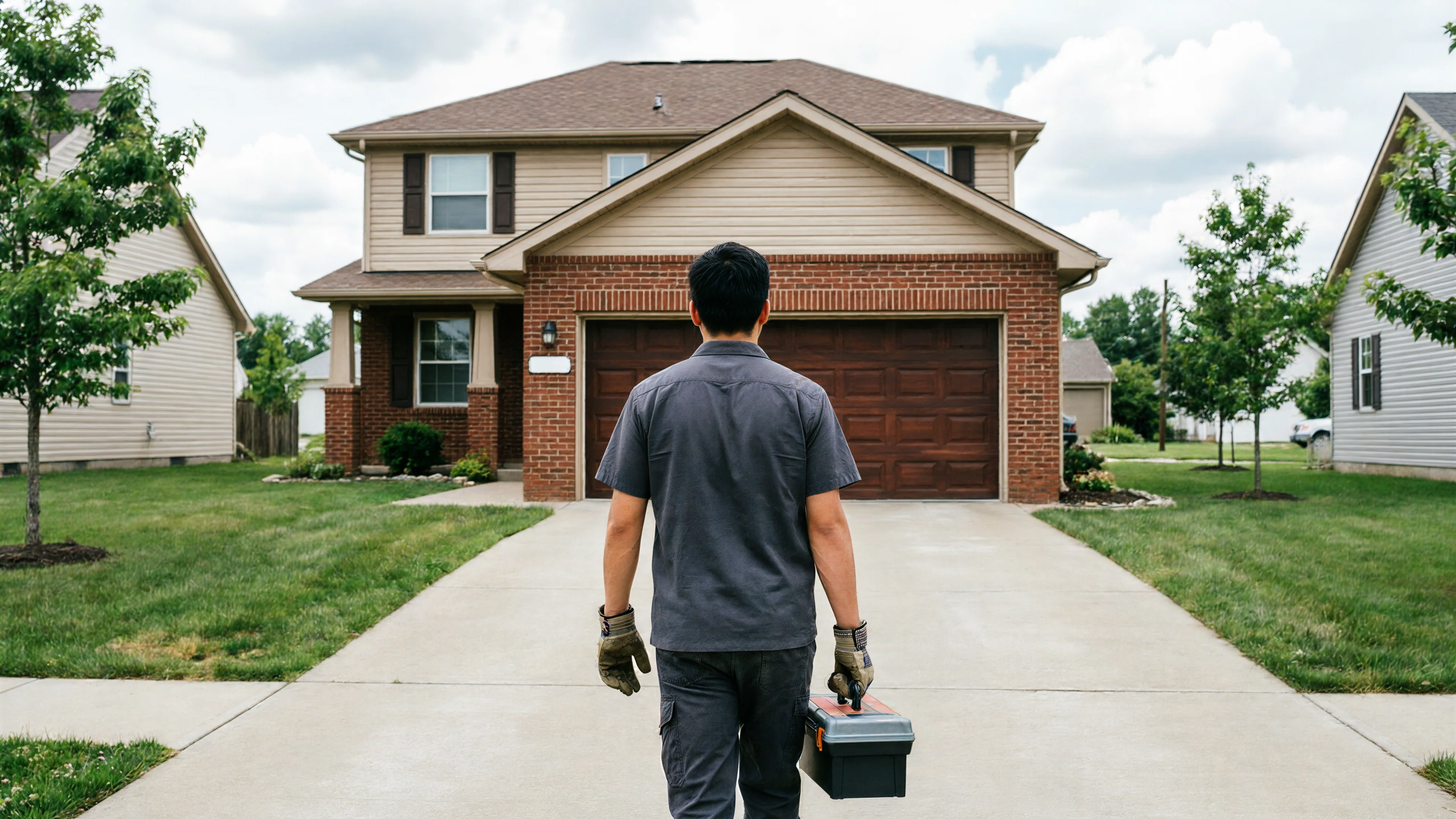
Broken spring or jammed door in Crystal? Edina Garage Door Pros drives the 10 miles out for 1950s-60s hardware that cold Minnesota winters break hardest.
DIY or pro
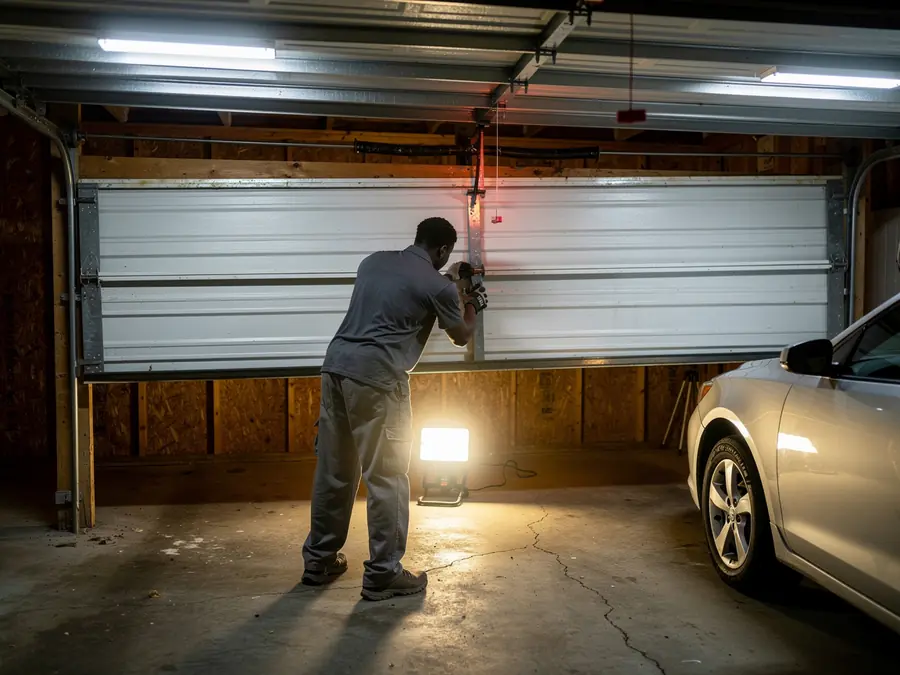
A garage door that won't open on a Crystal house built around 1959 is usually a torsion spring that's finally given out after decades of cold-weather cycling, or an extension spring setup that was never updated when the opener got replaced.
Either way, don't cut a wound spring or try to re-tension it yourself - that's the single fastest way to end up in urgent care instead of back in your garage.
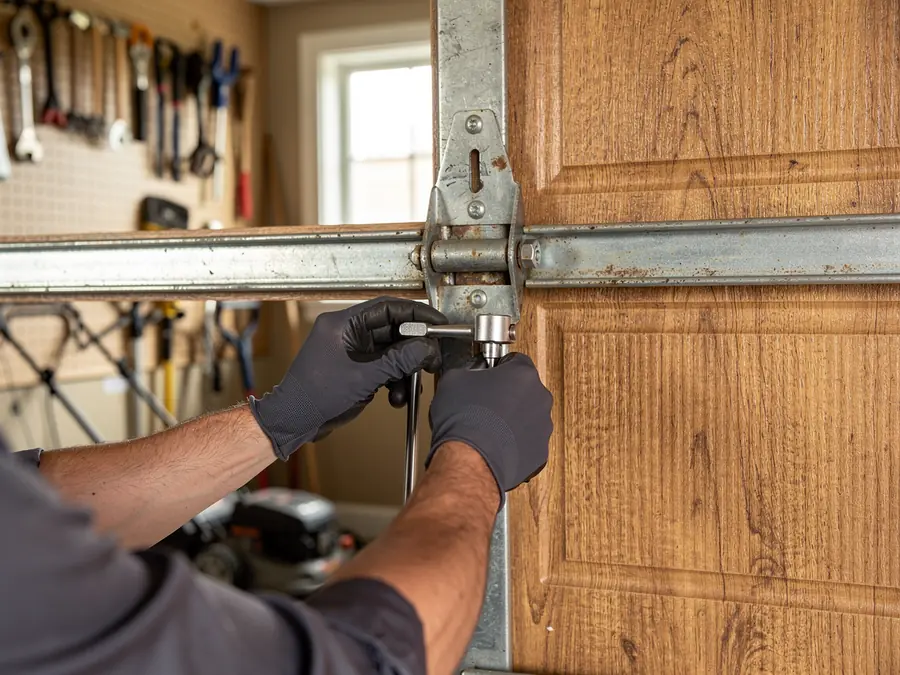
If the door is just stuck on a track, you can often free it by checking for a bent roller track near the bottom panel, which is common on doors this old once the rollers wear oval instead of round.
What you shouldn't do is force the opener motor against a jammed track; that burns out the gear set and turns a $20 roller into a full opener replacement. If the door won't budge and you can see a spring coil separated on one side, stop and call - that's not a DIY fix on any budget.
Pricing
We don't publish a flat number here because what a Crystal call costs depends on what's actually broken and what's on the truck that day. A single snapped torsion spring is a different job than a cable that's jumped the drum, and a door from the late 1950s may need a spring size nobody carries as a common stock item anymore, which changes the math. What we can tell you is that a repair quote always happens before work starts, not after, and that replacing a worn opener motor on an otherwise sound 1960s door is almost always cheaper than replacing the whole door. If your door is original to the house, expect the tech to flag hardware that's past its reasonable service life even if it isn't the reason for tonight's call.
Local causes
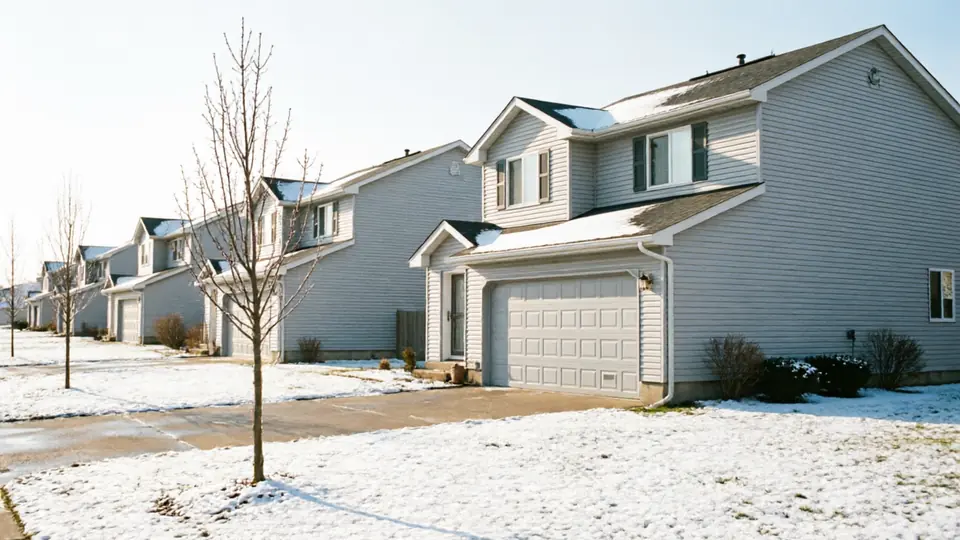
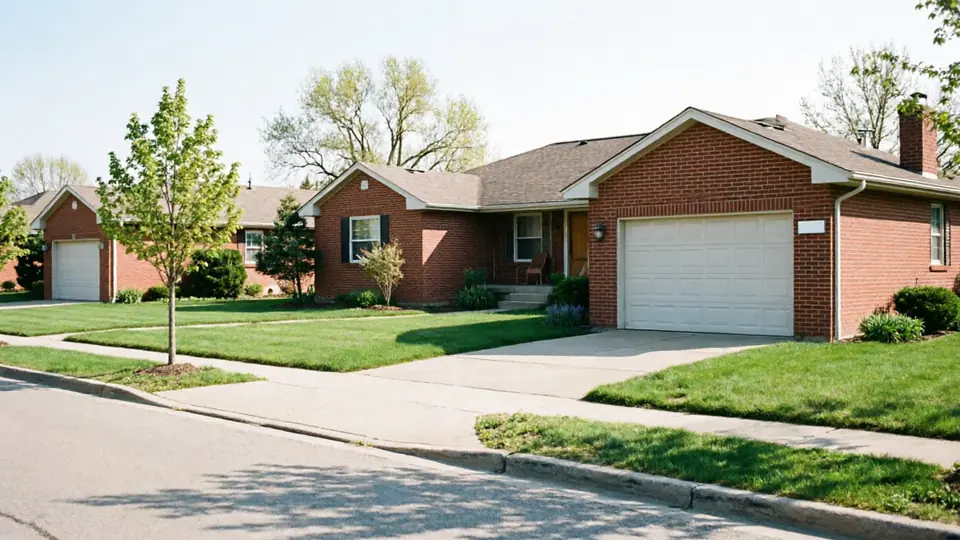
Crystal's housing stock centers on 1959, square in the middle of the first wave of postwar construction across this part of the Twin Cities metro. Doors and openers installed or replaced in that era, and the generation after it, were built for a lighter-duty climate expectation than what this region actually delivers - a cold band severe enough that steel contracts, lubricant thickens, and springs under tension take more stress per cycle in January than they do in July. Houses here are 10 miles out from our Edina base, which doesn't change the physics, but it does mean the tech loads parts for older torsion and extension setups before heading out, because a truck stocked for newer production-builder doors won't have what a 1959 track system needs. The age of the housing stock is the reason this town's calls skew toward spring and cable failure over opener circuit boards - the mechanical parts are simply older than the electronic ones.
Warning signs
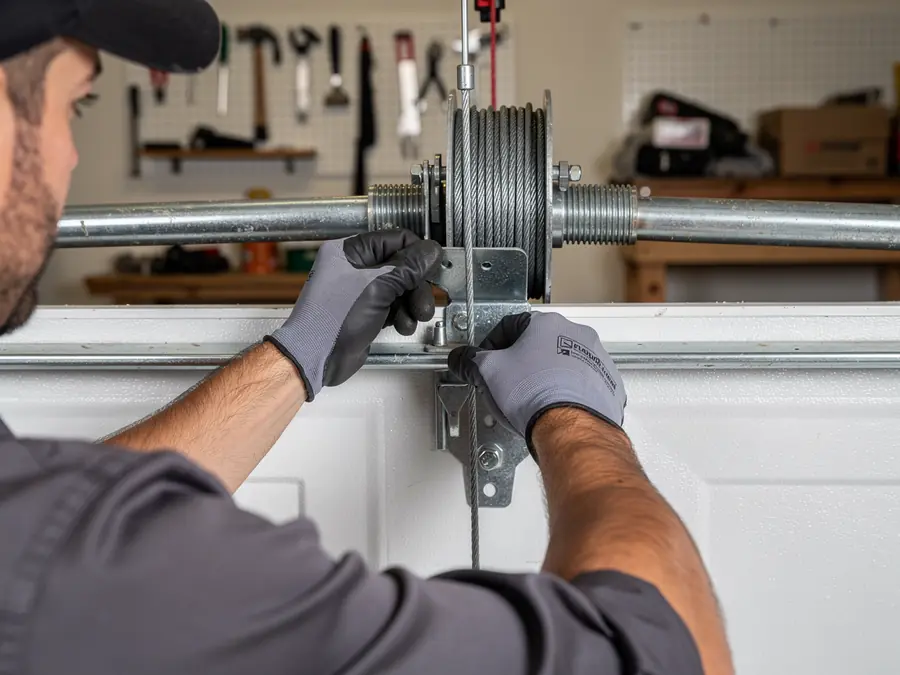
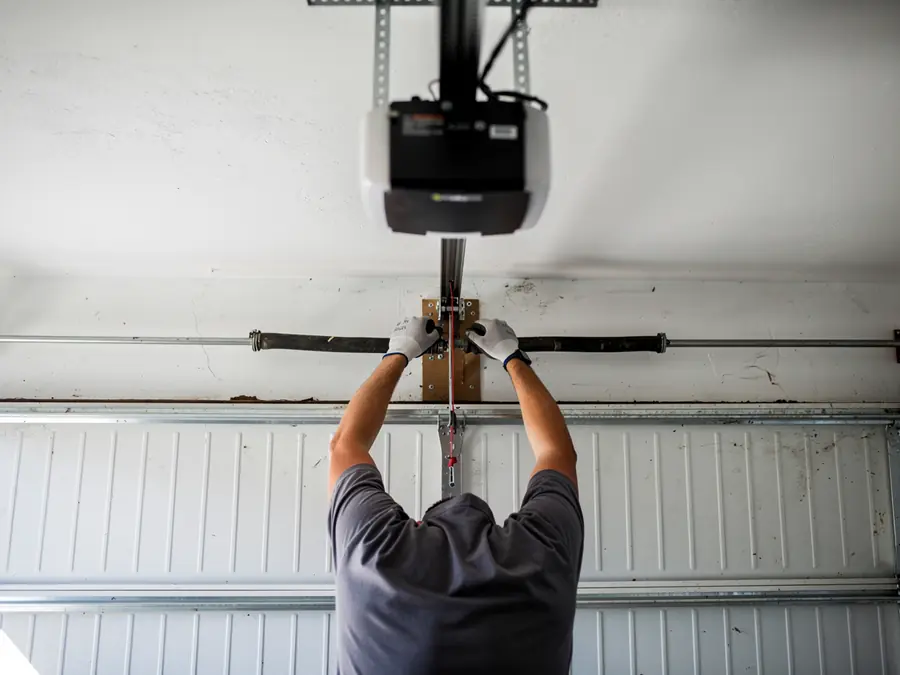
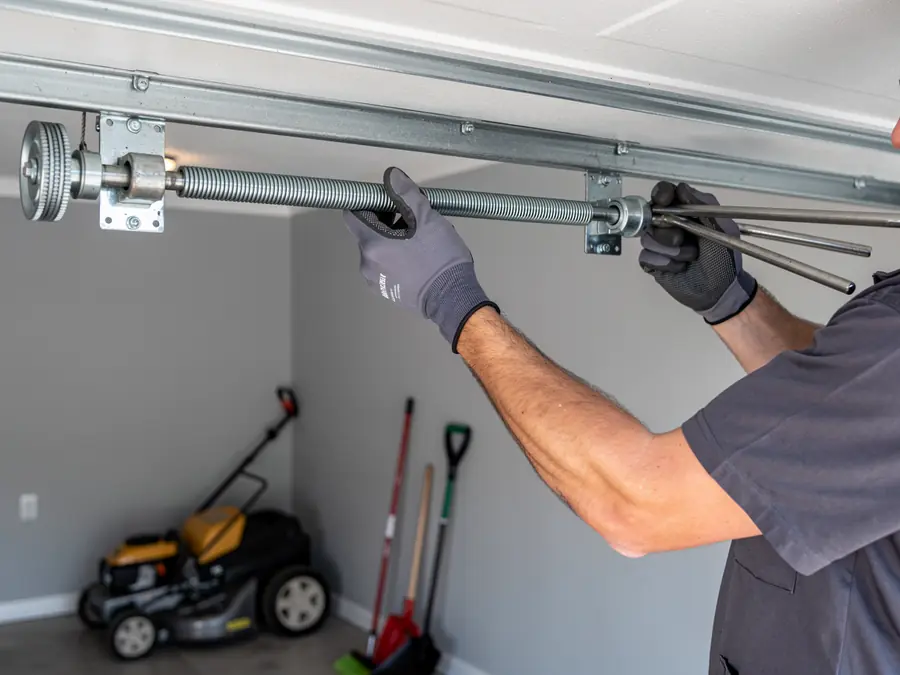
The most common call out of Crystal is a door that won't move at all, paired with a visible gap in a torsion spring mounted above the opening - the spring has separated and the door has no lift assist left.
Close behind that is a door that opens a few inches and reverses, usually a sign of a frayed cable or a drum that's slipped, both more likely on hardware original to a 1959-era build than on anything installed in the last fifteen years.
You'll also see doors that run loud and uneven, one side dropping before the other, which points to a roller or bracket that's finally failed after years of cold-weather cycling.
Less often, it's the opener itself - a motor that hums without turning the shaft, which on an older door usually means the gear has stripped under the extra load an aging spring can no longer offset. None of these are cosmetic; a door stuck halfway open is a security problem as much as an inconvenience.
Downtime
Because every Crystal call starts with the 10-mile drive from Edina, there's no local branch stock to pull from on short notice - what's on the truck when it leaves is what's available for that job. Common parts like standard torsion springs and rollers travel with the tech as a matter of course, so most single-point failures get fixed the same visit. Where it stretches out is a spring size or drum that fits older, less common hardware from the 1960s-70s building wave that defines this part of the metro - those sometimes need a second trip once the part's sourced. We'd rather tell you that up front than promise a same-visit fix we can't back up on a door that old.
Questions
Cold makes steel springs less forgiving - they lose a little flexibility and take more stress per cycle in freezing weather than in summer. On a Crystal house built around 1959, that spring has already absorbed decades of cold-weather cycling, so winter is often when the last bit of life runs out.
No. We're based in Edina, about 10 miles away, and drive out for calls. There's no local branch stock, so the tech loads common parts before leaving - which covers most repairs in one visit.
Depends on what's failed. A spring, cable, or roller repair on a sound 1959-era door is usually the cheaper call. If the panels themselves are rusted through or the track is bent beyond adjustment, replacement starts making more sense - we'll tell you honestly which situation you're in.
That's almost always a frayed cable or a slipped drum, not the opener itself. It's more common on older torsion setups like the ones typical of Crystal's 1960s-era housing stock, where the cable has had more cycles to wear through.
Explore more
Ready when you are
Edina Garage Door Pros repairs and installs garage doors, springs and openers in Edina, MN and the surrounding area.