How Local Conditions Play In
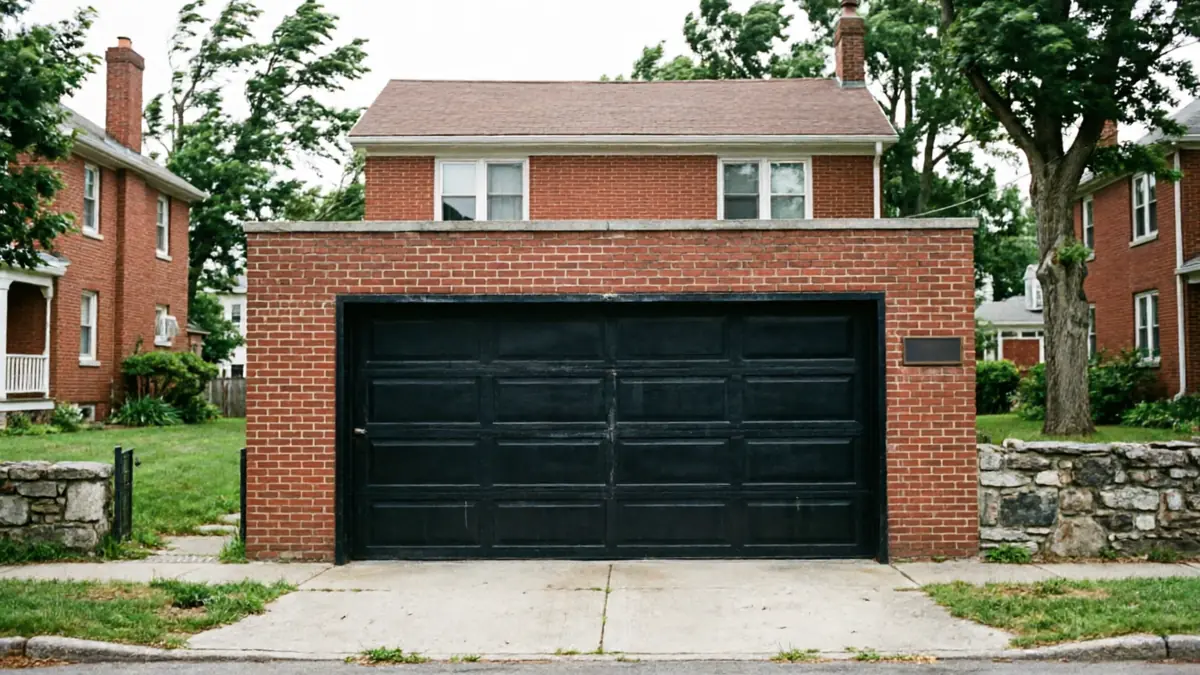
Most of the houses here went up between 1957 and 2005, with the midpoint sitting at 1975, so the typical Edina garage is either original 1970s construction or a later addition bolted onto an older house. That matters because the two garage types age differently once you factor in a cold-climate zone like this one. A detached garage with no shared wall to the house runs colder all winter, and that temperature swing is what kills torsion springs early - the steel contracts and expands more on a structure that never gets any leftover heat from the furnace next door. An attached garage built in the 1960s or 70s wave that makes up most of this housing stock usually shares a wall and sometimes a ceiling with heated living space, so the door itself has to work harder to keep that warmth in, and weatherstripping failure shows up faster as a comfort problem than a mechanical one. We see both setups on calls across this area, and the failure patterns split pretty cleanly along that line: detached doors tend to come in for spring and roller trouble, attached doors tend to come in for seals, insulation, and opener strain from a door that's heavier than it used to be once someone's added insulation panels over the years.
What It Costs
We don't quote a number without seeing the opening - a detached garage from this era often has a non-standard rough opening that an attached garage built to the same-period code doesn't, and that changes what fits. What we can tell you is what tends to drive the bill up or down. Panel count and width matter more than almost anything else. Spring type matters: a lot of the older detached structures around here still run extension springs instead of torsion, and converting one to the other is a bigger job than a straight spring swap. Insulation adds cost up front but matters more on an attached door, since that's the one acting as a wall between the house and the cold. With median household income in this area at $96,878, a lot of owners can afford to replace an aging detached-garage door with an insulated model rather than patch it repeatedly, and for a door past 25 or 30 years old, that's usually the better math than another round of spring and roller repairs. We'll tell you honestly when a repair isn't worth it instead of running up a bill on a door that's done.
What to Look At First
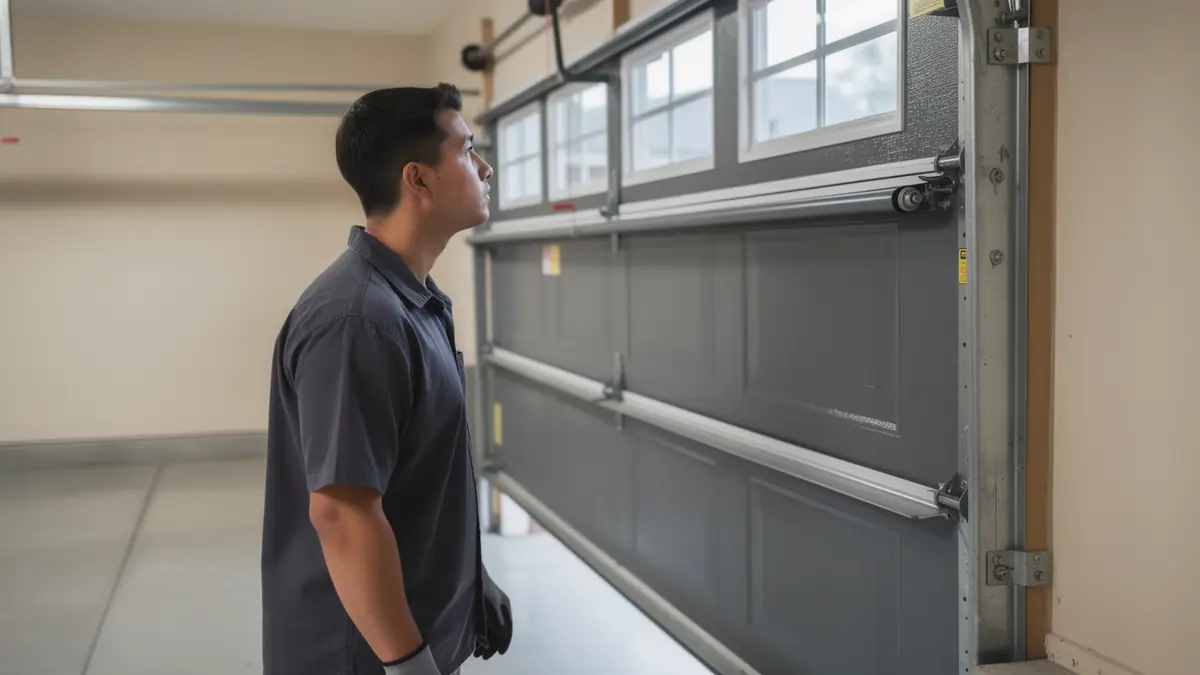
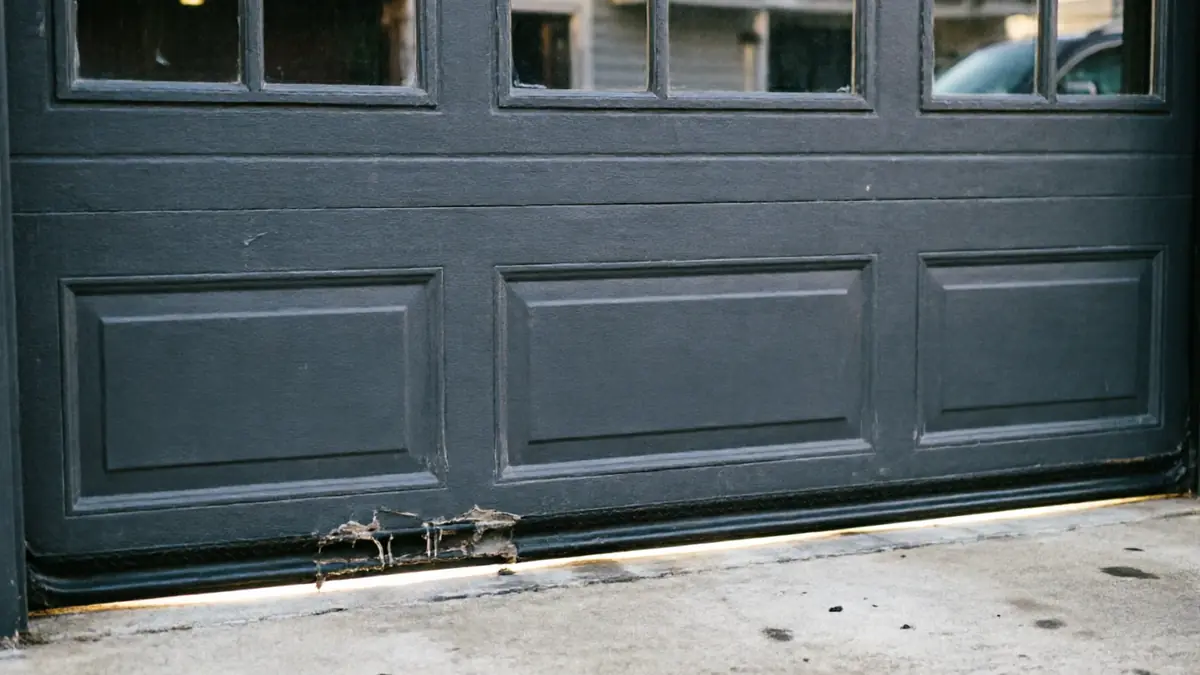
Start with where the door sits relative to the house. On a detached garage, check the bottom seal first - these structures see more direct wind and temperature swing with nothing next door to block it, and the rubber cracks and lets drafts and snow slide under faster than people expect. On an attached garage, check the weatherstripping around the frame and the seal where the door meets the house wall, since that's where heat actually leaks into or out of living space. Next, look at the springs. If the house falls into that 1960s-70s construction wave that's common across this area, there's a decent chance the spring setup is original or a direct replacement of the original, which can mean older extension-spring hardware on the detached side and a more modern torsion setup on an attached garage added or updated later. Listen to the opener too - strain on a cold morning usually means the door's heavier than the motor was sized for, which points to added insulation panels or a sagging panel pulling weight unevenly. None of this requires tools, just fifteen minutes with the door open and a flashlight.
What Is Going On
The split between attached and detached garages in this area isn't random - it tracks the building wave from 1957 to 2005 that put up most of the housing stock here, with the midpoint landing around 1975. Earlier builds in that range leaned toward detached garages set apart from the house; later ones, especially additions and remodels, tend to be attached. Richfield sits 4 miles south and Golden Valley 7 miles east, and the same 1960s-70s housing wave runs through both, so a lot of the detached vs. attached split we see on calls here repeats itself block by block in that direction. Severe cold-climate conditions push both types toward failure, just by different routes: detached garages lose spring life to temperature swing, attached garages lose seal integrity and put more load on openers trying to move a heavier, better-insulated door. Neither type is inherently the better setup - they just fail differently, and knowing which one you've got tells you what to watch for before it becomes a dead spring on a Tuesday morning or a door that won't seat flush against the frame.
Talk to a local pro
Garage door trouble in Edina?
Same-day service with honest, upfront quotes.