How Local Conditions Play In
Edina's housing stock runs 1957 to 2005, with the median build landing around 1975. That matters more than people think, because garage door insulation requirements didn't get written into energy codes the way they're assumed on new construction today. A door put up in 1975 was built to keep rain and squirrels out, not heat in. It's a steel skin, maybe a wood panel, and not much else.
Edina sits in a COLD-severe climate band. That's not a marketing phrase - it means long stretches of sub-freezing air pressing against a door that was never designed to hold a thermal break. The result shows up two ways: a cold garage that drags down the temperature of anything stored against the shared wall, and condensation forming on the inside face of the door panel on the coldest mornings, which over years rusts out hinges and track hardware from the inside.
Across the broader service area - the 48 named neighborhoods this crew covers, from Richfield to Golden Valley to Wayzata - the heaviest concentration is still that same 1960s-70s build era. So this isn't a one-off quirk of a single Edina block. It's the housing stock, full stop, and it shows up on nearly every service call in a house from that window.
What It Costs
There's no flat number to give here, and giving one would be dishonest - a single uninsulated steel door costs a different amount to replace than a double, and the hardware underneath a 1975 door (torsion springs sized for a heavier, non-insulated panel) sometimes needs replacing along with the skin. What can be said: with a median household income of $96,878 across the service area, swapping an old single-layer door for an insulated one is a common upgrade here, not a stretch purchase reserved for a remodel budget.
The honest limitation: we don't quote a number over the phone sight unseen. A door that looks fine from the driveway can have a bent track or a spring sized wrong for its replacement panel, and either one changes the job. What we can tell you walking up the driveway is whether you're looking at a straightforward panel swap or something that also needs new rollers, new hinges, or a heavier opener to handle an insulated door's added weight.
If the existing door and hardware are sound, insulating retrofit kits are sometimes cheaper than full replacement - but on a door built in the 1960s or 70s, the track and spring are usually at or past the end of their service life anyway, so replacement often ends up the better call.
What to Look At First
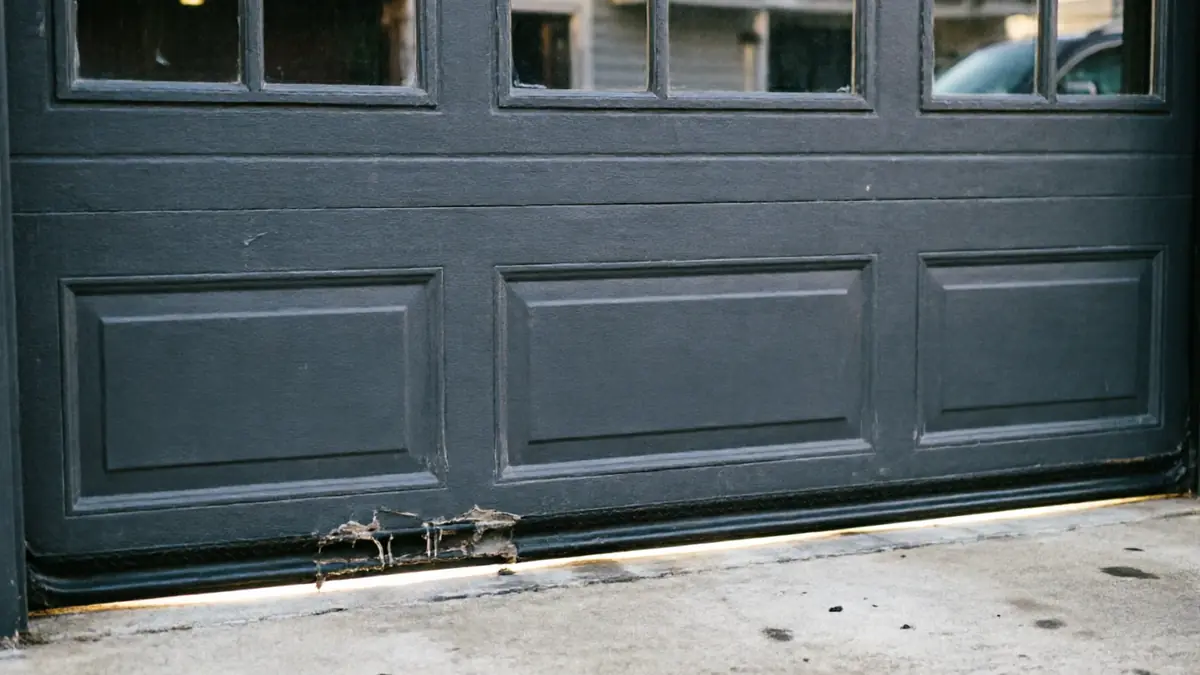
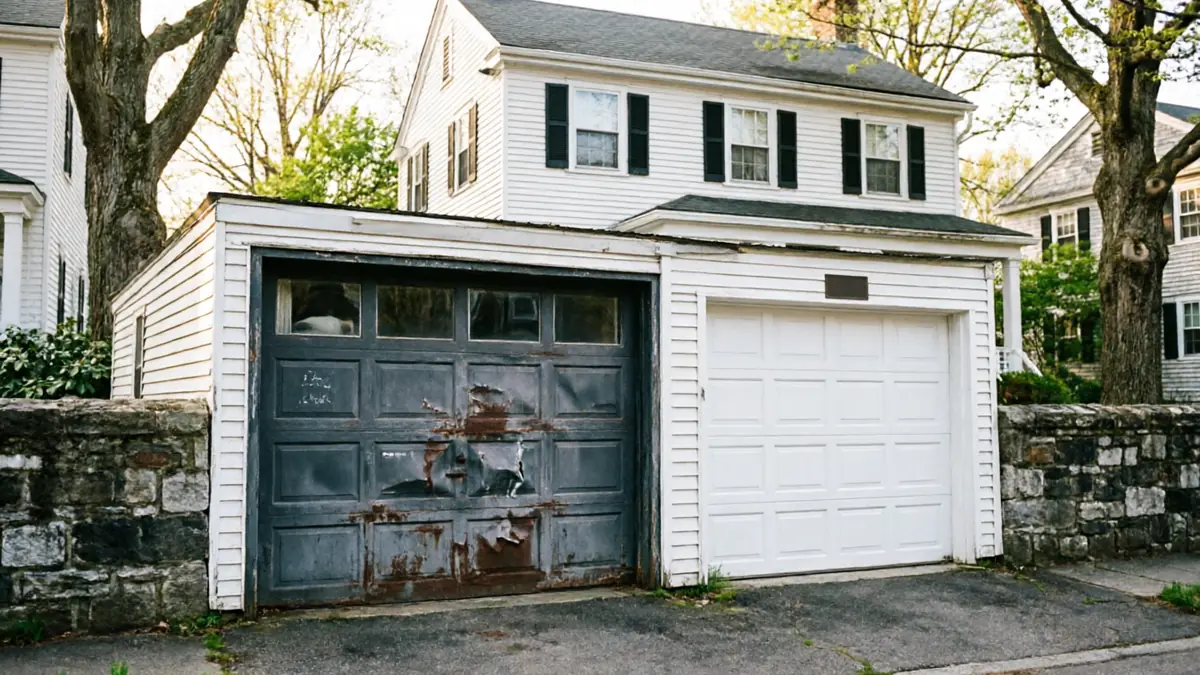
Start at the bottom panel. On a house from this era, that's the section that takes the most moisture and road salt off the driveway, and it's usually the first place steel starts to bubble or rust through. Press on it - if it flexes more than the panel above it, water's gotten behind the skin.
Next, check the weatherstrip at the base and sides. Original installs from the 1970s rarely had a thermal seal worth mentioning, and even where someone added a bottom astragal later, it's often brittle or torn by now. Daylight visible around the edges in winter is a straight line to the condensation problem described above.
Look at the spring. A torsion spring on a door this old was sized for the original panel weight. If anyone's swapped the door for a heavier insulated one without re-rating the spring, the opener will strain and the spring will wear faster than it should.
Last, check the inside face on a cold morning, early, before the garage warms up. If you see beads of moisture or a faint rust bloom spreading from the panel seams, that's the climate and the build era doing exactly what you'd expect them to do together.
What Is Going On
Put simply: a door built around the median 1975 construction date in Edina was made for a different set of expectations than a door built today. It wasn't bad work - it met what people wanted and what cost made sense at the time. But insulation standards for garage doors weren't part of that picture the way they are now, and COLD-severe winters here have spent decades finding every gap in that design.
The symptom homeowners usually notice first isn't the door itself - it's a cold spot in a room that shares a wall with the garage, or a layer of frost on stored boxes near that wall. By the time someone calls about the door directly, it's often because a panel has started rusting from repeated condensation cycling, or a spring sized for the original lighter panel has finally given out under an opener that's been straining against it for years.
This is also why a repair call on one of these doors sometimes turns into more than expected. Fixing a cable or a roller on a 50-year-old setup is straightforward. But once you open up the hardware on a door from this build era, you're often looking at a spring, a track, and a panel that were never a matched, insulated system to begin with - and patching one piece doesn't fix what the other two are doing in the cold.
Talk to a local pro
Garage door trouble in Edina?
Same-day service with honest, upfront quotes.