Bang before visible damage
You'll hear it before you see it, a loud bang from the garage, often first thing on a cold morning. Sometimes the door looks fine but the opener strains and groans trying to lift weight the spring used to carry.
Edina, MN
Broken torsion spring on a 1960s-70s Edina home? We replace both springs to match the door's age and weight, built for Minnesota cold.
Warning signs
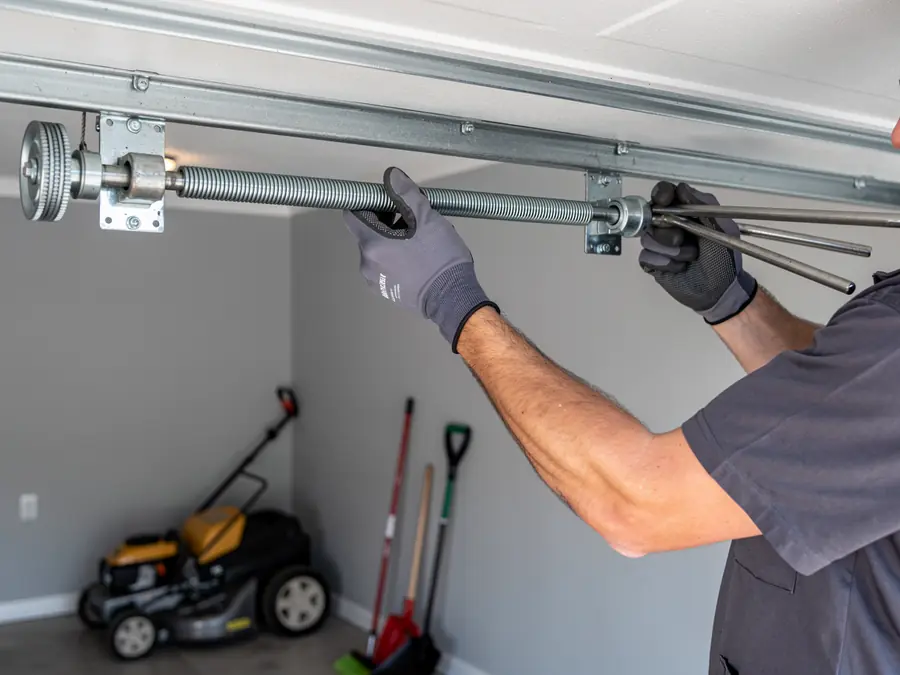
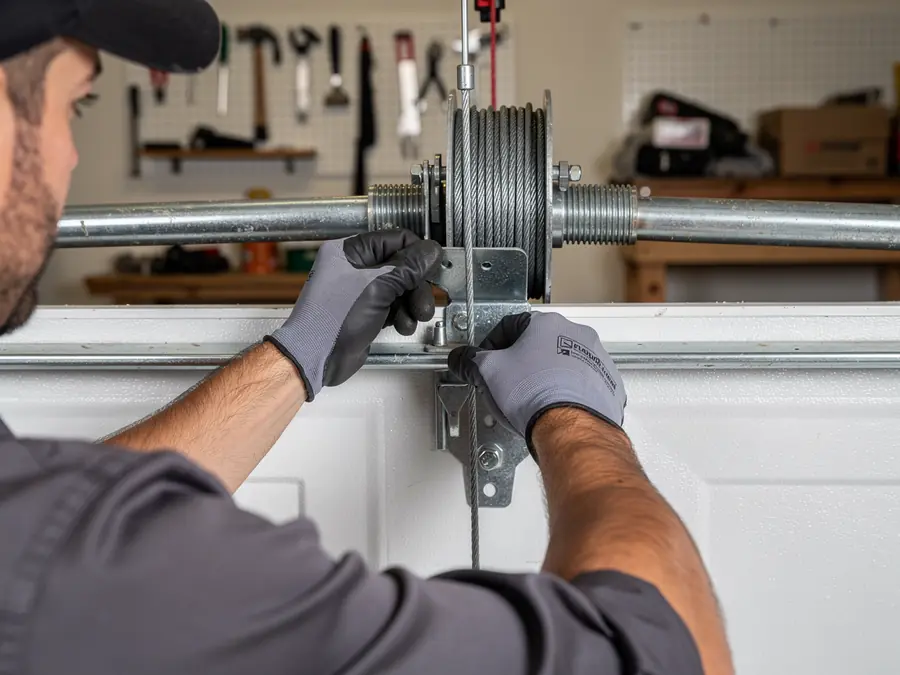
The most common call we get is a door that won't budge, or one that shoots up fast and then drops hard. Usually it's a torsion spring, mounted on a shaft above the door, that has snapped.
You'll hear it before you see it, a loud bang from the garage, often first thing on a cold morning. Sometimes the door looks fine but the opener strains and groans trying to lift weight the spring used to carry.
On older doors, especially the heavier wood or early steel panel doors common in homes built in the 1960s and 70s, the spring failure can also show as a door that opens a few inches and stalls, because the opener isn't built to lift the full dead weight alone.
If your door feels unusually heavy when you lift it by hand with the opener disconnected, that's the spring telling you it's done. We see this across the whole service area, not just in one neighborhood, because the housing stock and the winters are the same everywhere between here and the lakes.
Our process
We replace torsion springs in pairs, even if only one has broken, because the second one is almost always close behind on the same wear schedule and running mismatched springs puts uneven strain on the shaft and cables.
We size the new springs to the actual door weight and track type, not just whatever was on the door before, since a lot of homes in this area have had a door swapped at some point without the spring hardware updated to match.
For homes with the original torsion setup from the 1960s-70s building wave, we also check the center bearing plate and cable drums while we're in there, since those parts wear on the same timeline as the spring.
We don't patch a spring or add winding cones to a cracked one. A spring under that much tension either holds the full rated cycles or it doesn't, and there's no safe middle ground.
Local causes
Housing across this service area was mostly built between 1957 and 2005, with the median build year around 1975, and across the 48 communities we cover the bulk of that stock dates to the 1960s and 70s. Torsion springs are rated in cycles, not years, and a door used twice a day for fifty years runs through that rating regardless of how well it was maintained. That alone would cause failures on a steady schedule, but the climate here pushes it faster. This is a cold-climate zone with severe winter conditions, and steel spring wire contracts and stiffens in sustained cold, which adds stress to a spring that's already near the end of its rated life. That's why we see a real jump in spring-failure calls on the first hard cold snap of the season, not spread evenly through the year. It isn't about any one house being neglected. It's a 50-plus-year-old mechanical part meeting a Minnesota winter.
Watch-outs
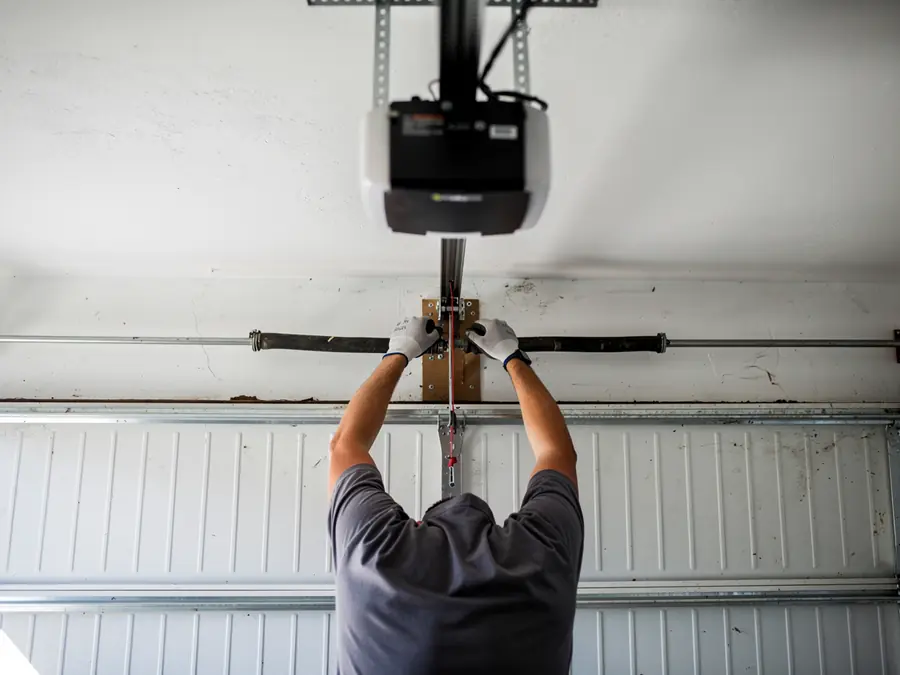
A broken spring under tension is dangerous to handle without the right bars and clamps, and we don't recommend any homeowner try to wind or unwind one themselves.
Beyond the safety issue, a door run on a broken spring, even briefly, can bend the top panel, strain the opener's gears past what they're built for, or snap a cable, which turns a spring job into a bigger repair.
On heavier older doors, especially insulated steel or wood panel doors from the earlier end of the 1957-2005 build range, running the opener without spring support even a few times can burn out the motor.
One honest limit: if your door is original hardware from that era and the drums or shaft show heavy rust or wear, a spring swap alone won't fix it, and we'll tell you when the right call is replacing the hardware set instead of just the springs.
Questions
Disconnect the opener using the release cord and try lifting the door by hand. A door with a working spring should feel close to weightless and stay roughly in place when partway open. If it's heavy, drops on its own, or won't stay up, the spring has lost its tension or broken, not the opener.
Torsion springs are rated in cycles and installed as a matched pair. If one has reached the end of its life, the other is almost always close behind on the same schedule. Replacing both keeps the lift balanced and avoids a second service call a few months later.
Yes. This area sits in a cold climate zone with severe winter conditions, and steel spring wire stiffens and loses flexibility in sustained cold. Combined with springs already near the end of their rated cycle life on 1960s-70s era doors, that's when we see the sharpest jump in broken-spring calls.
Explore more
Ready when you are
Edina Garage Door Pros repairs and installs garage doors, springs and openers in Edina, MN and the surrounding area.