How Local Conditions Play In
Edina sits about 4 miles from Richfield and roughly 3 miles WSW of Golden Triangle, in a stretch of the Twin Cities where winters bring severe cold rather than the milder swings you'd see further south. That matters for garage doors because steel contracts in the cold, grease thickens, and torsion springs lose a measurable amount of lifting power once temperatures drop hard. A spring that was balanced fine in October can feel noticeably heavier by January, not because anything broke, just because cold changes the math.
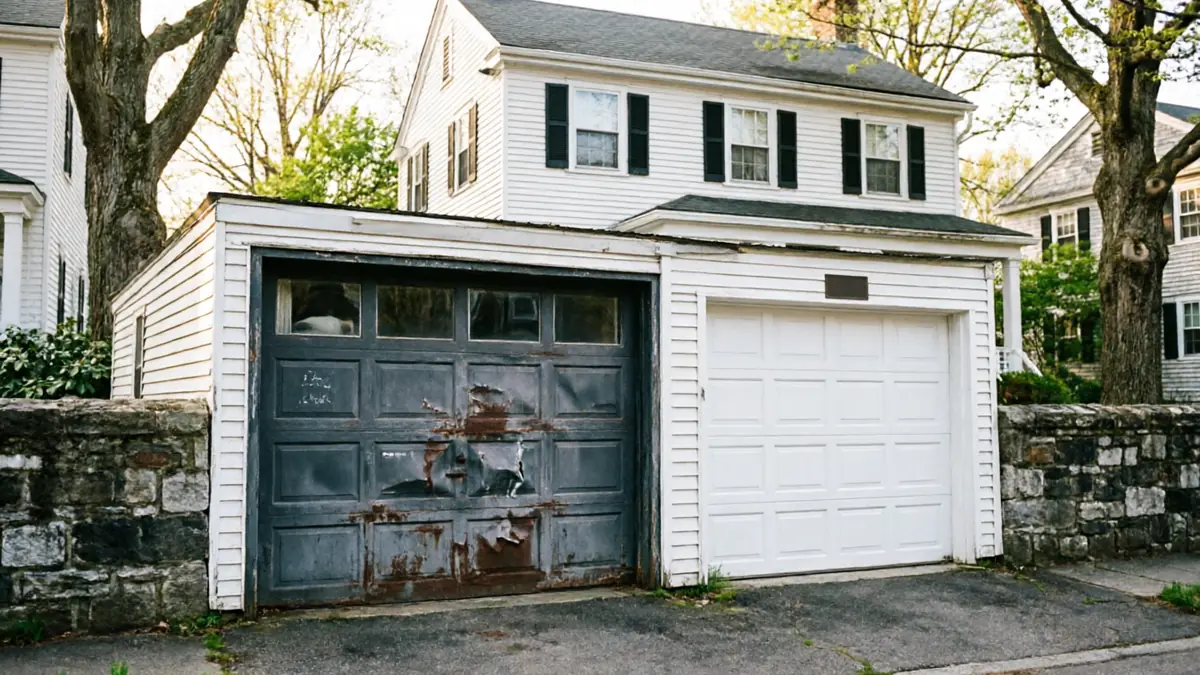
Most houses in this part of town went up between 1957 and 2005, with the typical build year landing around 1975. That puts a lot of doors on hardware that's now 20 to 60 years old, original torsion setups on older side-mount rail, or early-generation chain-drive openers that were never built for today's insulated door weight. We don't assume a door is modern just because the house looks updated inside. The garage is often the one room nobody's touched since it was built.
Any technician working here should be checking the door's age against the house's build era before touching a single bolt, because a spring sized for a lighter 1970s door will fail fast under a heavier replacement panel.
What It Costs
We don't have a flat number to hand you here, and we're not going to invent one. Spring size, door weight, drum condition, and whether the opener needs replacing alongside the hardware all change the number, and a door from the 1970s on original track costs differently to fix than a 2005-era door with a newer opener bolted to older springs. What we can tell you is that in a market with a median household income around $96,878, we see owners who'd rather pay for the right spring size once than for a cheaper mismatched part that fails again in a year.
One honest limitation: if your opener and spring setup is old enough that parts are no longer made for it, replacement usually makes more sense than chasing a repair, and we'll tell you that straight rather than keep billing for patches. A tech who can look at the door, note the age bracket it falls into, and give you a real range on the spot is doing the job right. Anyone quoting a number before they've seen the door is guessing.
What to Look At First
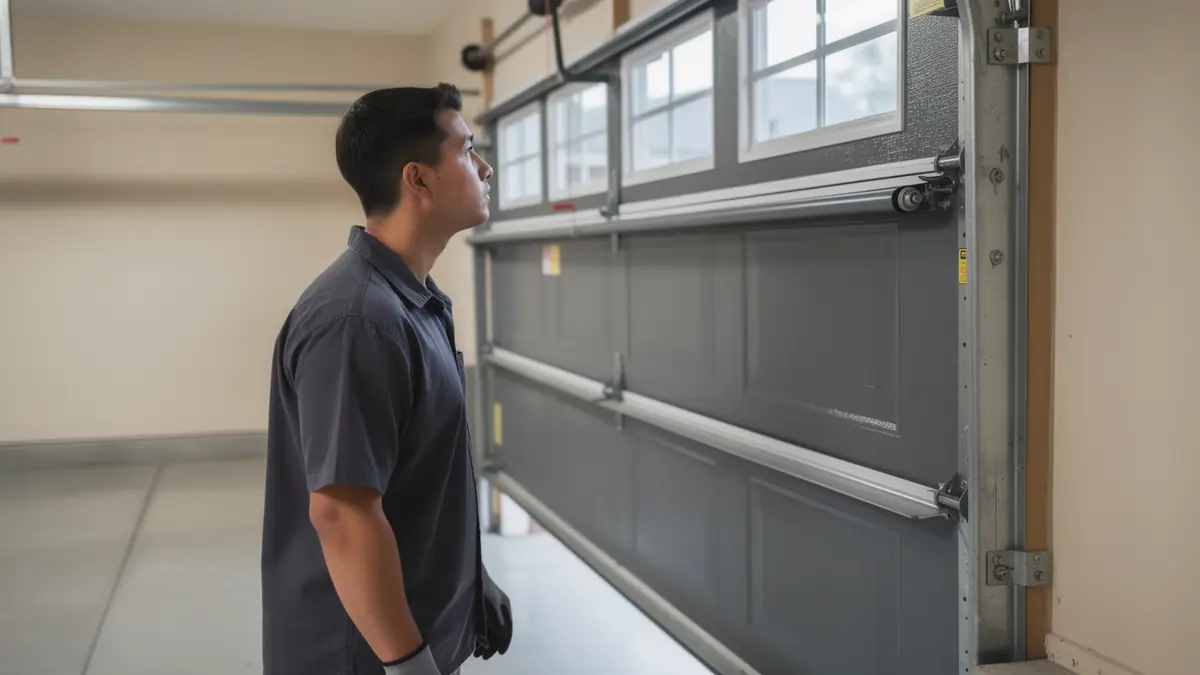
On a house built in the 1960s or 70s, the first thing we check is the torsion spring wind and whether it's an original single spring or a later retrofit. Side-mounted extension springs still show up on homes from that era, and those carry different safety requirements than a centered torsion bar. Next is the drum and cable condition, since cold-weather contraction is hard on cable strands that have already seen 40-plus winters.
After that we check track alignment. On older homes the track was often set for a lighter wood-panel door, and if a homeowner has since swapped in a heavier insulated steel door, the rollers and track brackets can be under more load than they were built for. Last is the opener's force setting, because a severe-cold climate means the opener motor is working harder against stiffer springs for a good chunk of the year, and a force setting left at factory default from a 1980s install is rarely right for today's door weight.
What Is Going On
Most of the calls we get that start as 'the door won't open' trace back to one of two things given this area's housing age and climate: a torsion spring that's lost tension faster than expected because of the cold, or an opener that's been compensating for a tired spring for months before finally stalling out. Neither is usually sudden. The door gets a little heavier to lift by hand each week, the opener strains a little louder, and then one cold morning it just stops.
With 114,022 owner-occupied houses across the service area and most of that stock dating to the 1960s and 70s, we see a lot of hardware reaching the point where it's original or close to it. That's not a problem on its own, but it means a tech should be checking spring wind count and cable wear before assuming the fix is the opener. Swapping a logic board on a door that just needs a properly sized spring doesn't solve anything, it just delays the real call.
Talk to a local pro
Garage door trouble in Edina?
Same-day service with honest, upfront quotes.