Fatigued original springs
That era used torsion springs wound for lighter steel doors than what's sold today, and a lot of those original springs are still on the house, just fatigued past the point of holding.
Roseville, Edina
Broken torsion springs on Roseville's 1960s-era garage doors, fixed by a crew that travels 13 miles from Edina. Parts sized for cold-climate cycling.
On the truck
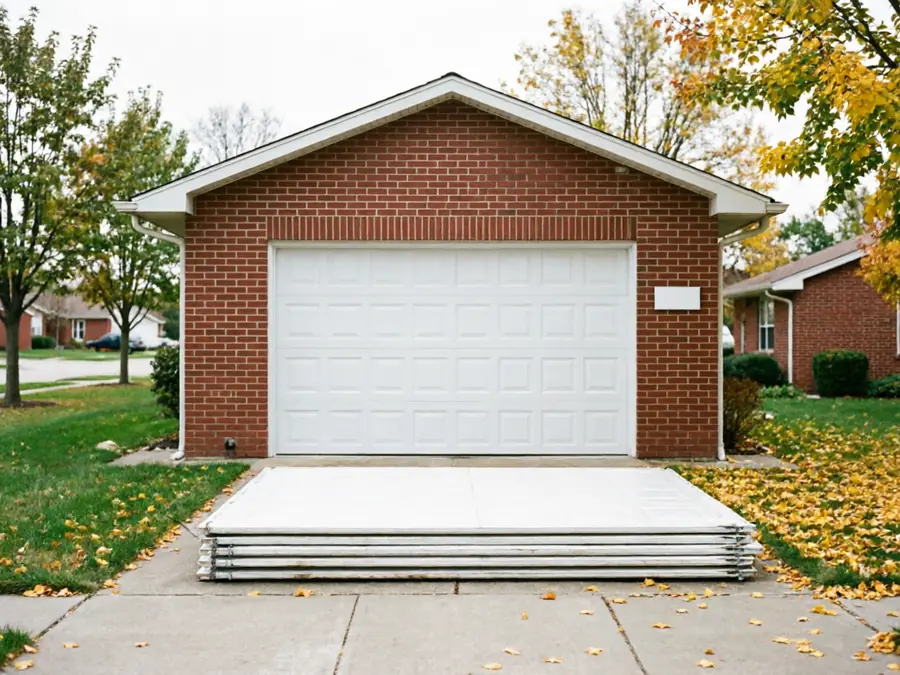
Most of the spring calls we take in Roseville are on doors that went up around 1968, which puts them square in the middle of the service area's 1957-2005 build window.
That era used torsion springs wound for lighter steel doors than what's sold today, and a lot of those original springs are still on the house, just fatigued past the point of holding.
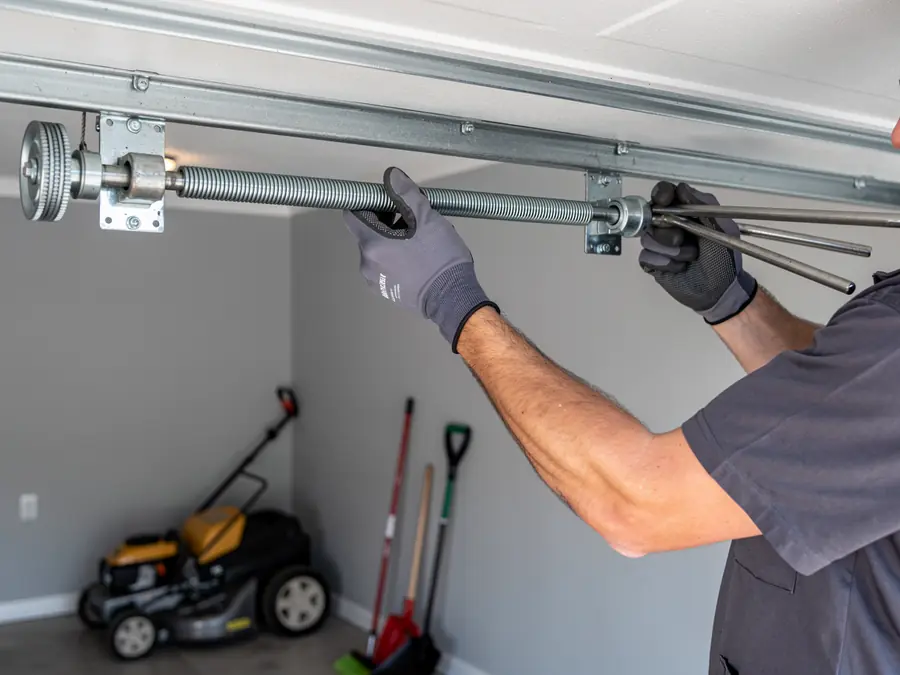
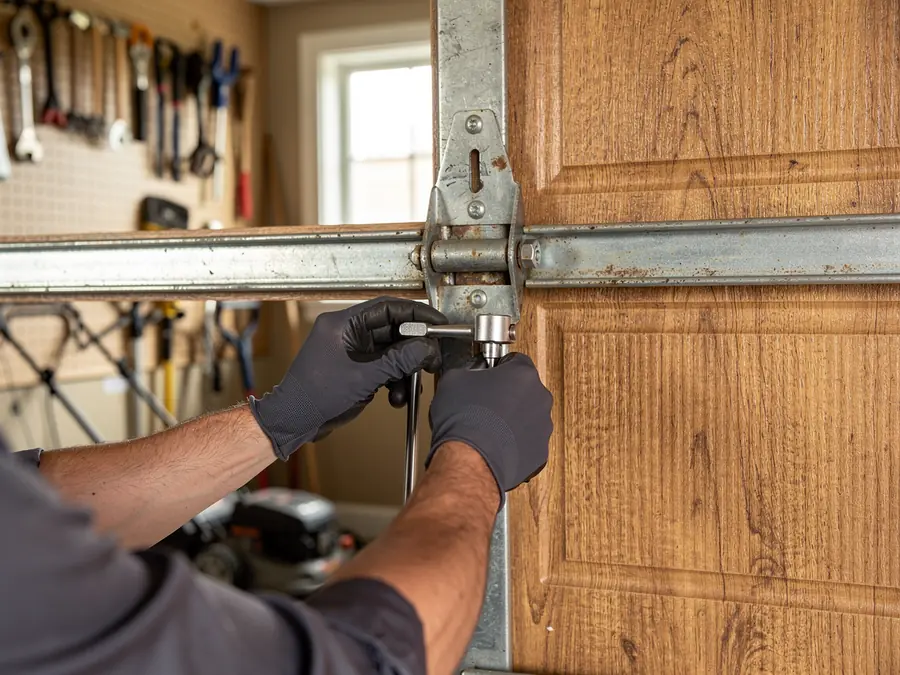
We stock torsion springs in the wire gauges that match that period's door weight, along with the end bearing plates and center brackets that wear out alongside them. We also carry standard extension springs for the smaller run of older doors that never got converted to torsion hardware.
What we don't carry on the truck is every obsolete bracket or drum size - if a door's hardware was a one-off from a manufacturer that's long gone, that part may need to be ordered, and we'll tell you that up front rather than force a fit that won't hold. Cold-rated springs cost a little more than the standard stock, but in a severe-cold climate band, the standard stuff fatigues faster, so we don't put it on a Roseville door.
Watch-outs
A spring on a door from the late 1960s has usually had fifty-some winters of expansion and contraction working against the coil, and galvanized coating from that era doesn't hold up the way current coating does.
The common failure is a torsion spring snapping clean at the cone, usually in the first cold snap of the season when the steel is stiffest and least forgiving. You'll hear it - a bang loud enough to bring someone out of the house.
Less dramatic but just as common: a spring that hasn't broken but has lost enough tension that the opener is doing all the lifting, which burns out the opener's drive gear faster than it should.
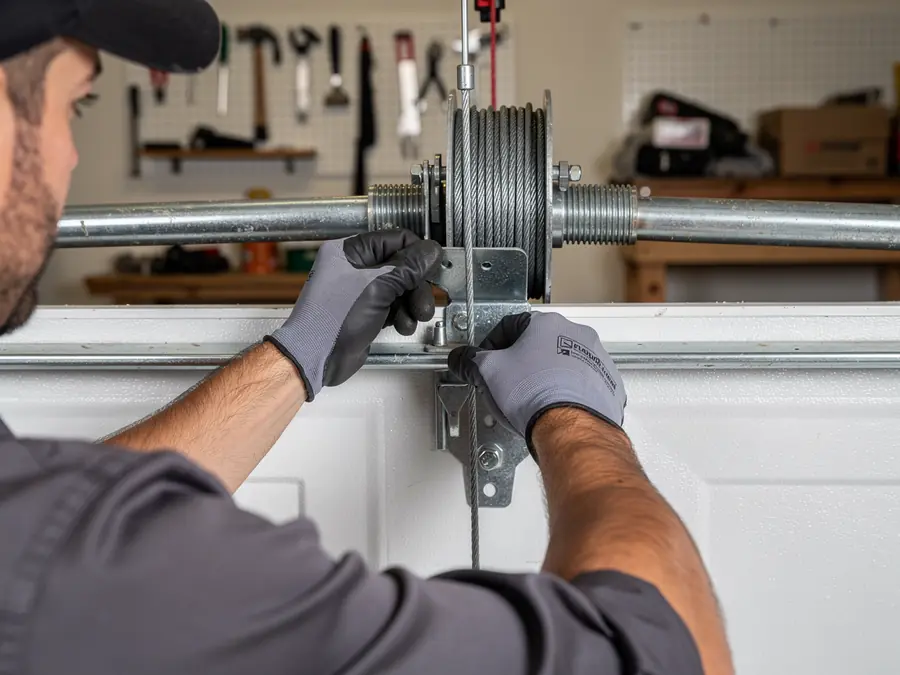
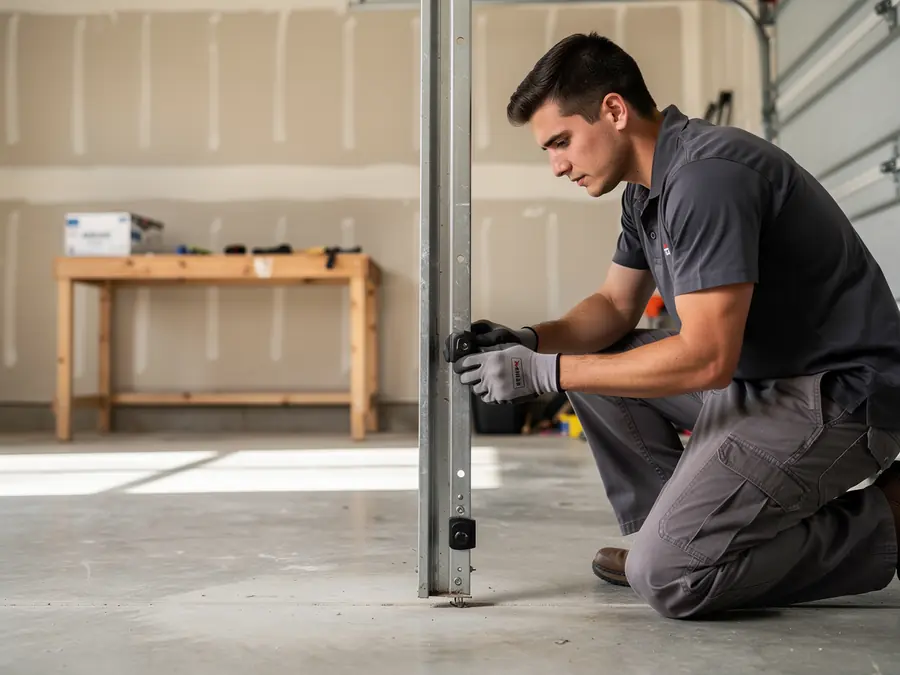
On a lot of these older doors, a worn cable or a bent end bearing plate rides along with the spring problem, because the hardware was all installed and aged together. We check the whole assembly, not just the obvious broken coil.
Our process
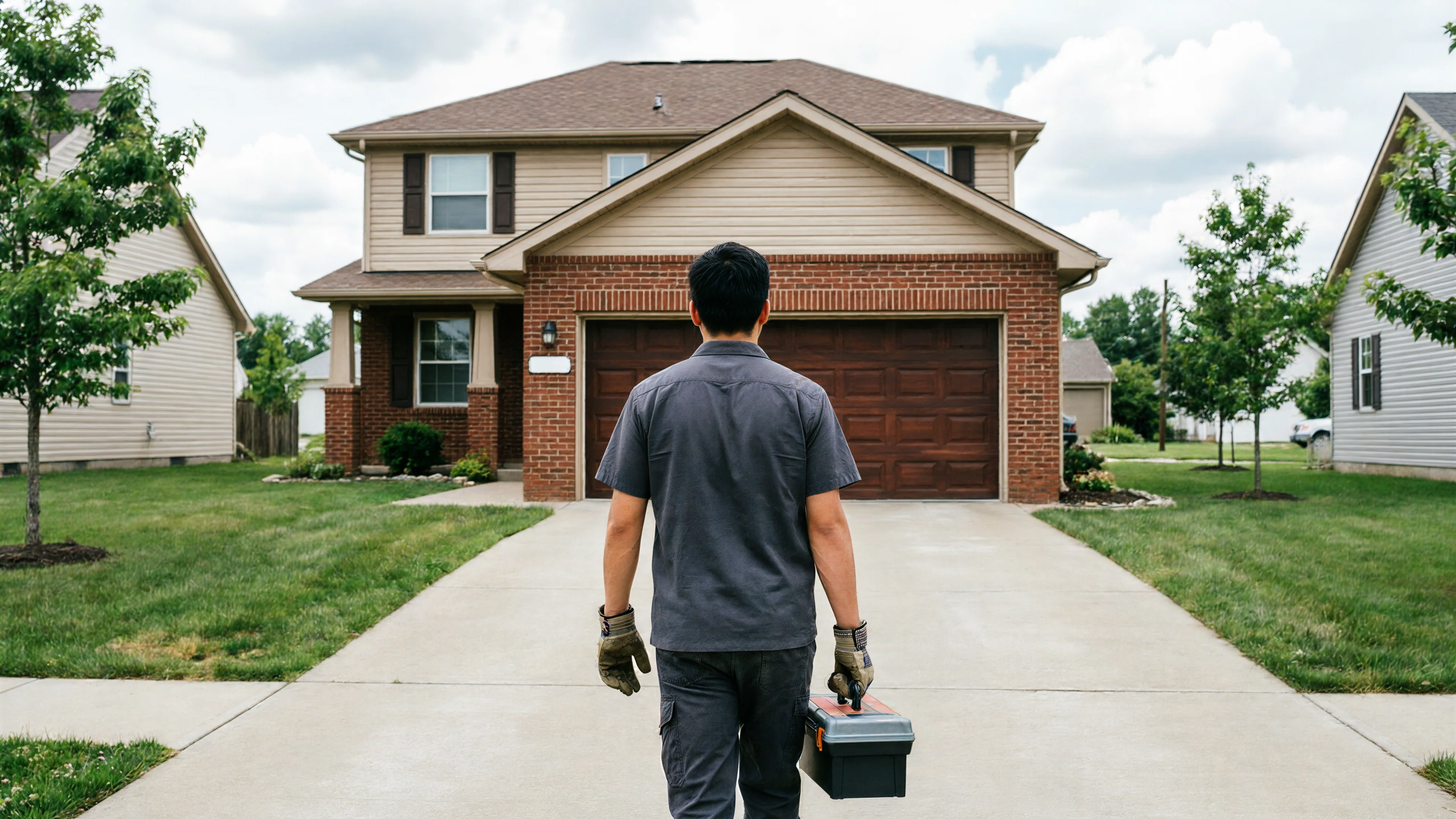
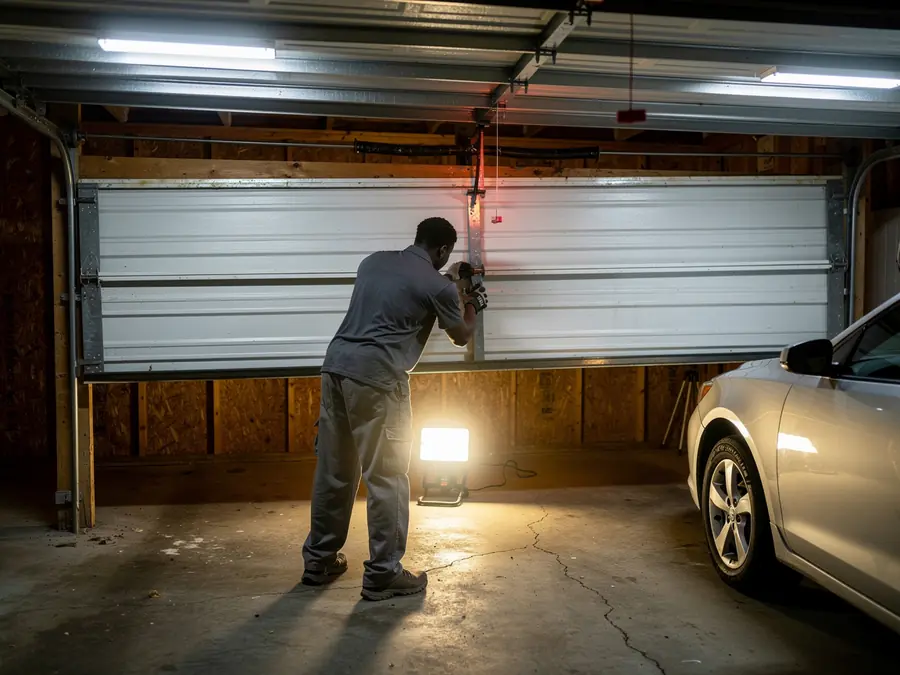
We come out from Edina - it's about a 13-mile run to Roseville - with the torsion or extension springs sized to the door, plus the bearing plates, cable, and drums most likely to need replacing alongside them.
On a standard double-door torsion setup we replace both springs as a pair even if only one broke, because a matched spring under tension against a fatigued one just transfers the failure down the road.
We measure the door weight and wind the new springs to that number rather than guessing off the old spring's wind count, since fifty-plus years of stretch can throw off what's actually on the door now.
If the opener's drive gear has been compensating for a weak spring for a while, we'll flag that separately - that's a different repair, and we're not going to bundle a part you don't need into the invoice.
Local causes
Roseville sits in a cold climate band with winters severe enough that steel contracts and expands hard on every spring in the service area, Roseville included. A spring rated for a milder climate loses its temper faster here, which is part of why the torsion springs we install are cold-rated rather than the lighter stock sold at general hardware counters. Add in that a big share of the area's houses, Roseville's among them, were built in the same roughly twenty-year stretch and carry similar-aged hardware, and you get a pattern: springs failing in clusters during the first hard freeze rather than evenly spread across the year. It's not bad luck on any one house - it's forty, fifty years of the same steel doing the same job in the same weather.
Questions
We don't have a precise lifespan figure for this, but a lot of the springs we replace here are original to houses built around 1968, so they're running on borrowed time well past what any spring is meant to handle. Once a spring is thirty-plus years old, assume it's near the end regardless of whether it's showing visible wear.
No. We run out of Edina, about 13 miles away, and cover Roseville along with the rest of the area. We don't keep a branch or depot in Roseville, so we're not able to promise a response time specific to this town.
On a two-spring torsion setup, we replace both even if only one failed. A new spring paired against an old, fatigued one puts uneven load on the shaft and tends to fail again within a year or two, so replacing the pair is the more durable fix.
The service area sits in a severe cold climate band, and steel coils get stiffer and more brittle as temperatures drop. A spring that's been losing tension slowly all year often finally lets go during the first hard freeze, which is why winter is when we see the most broken-spring calls.
Explore more
Ready when you are
Edina Garage Door Pros repairs and installs garage doors, springs and openers in Edina, MN and the surrounding area.